First quick Reminder:
What’s a Mesh ?
A mesh is a 3D object, generally an array of data containing the positions of vertices.
The vertices are the points that make up the shape of the object. We need the geometric position of these points to translate them into our scene.
For OpenGL, meshes are created from several triangles.
What’s OpenGL ?
OpenGL (Open Graphics Library) is an API (application programming interface) used for 2D and 3D rendering in graphics applications. OpenGL interacts with our graphics card.
For my scene I use OpenGL ES 3.0, ES stands for Embedded system. It’s a mix between OpenGL 3 and OpenGL 4.3 OpenGL ES 3.0 is compatible with multiple platforms.
Used for this graphics loop: initialising things, clearing our screen, drawing, swapping buffers, clearing and destroying everything. OpenGL is in charge of rasterization, the system that converts our mesh vertices into pixels for our screen.
Final Scene
Here are the different key principles applied in my scene.
Some elements have values that can be modified directly in the 3d scene using an imgui window.
I’ve created 3 predefined presets that change the atmosphere of the scene.
Feel free to try some cool settings
Elements
- HDR Texture
- OBJ Model
- ShadowMap
- Deferred Shading and SSAO
- PBR with IBL
- Instancing
- Cubemap
- PostProcessing Bloom and Filter
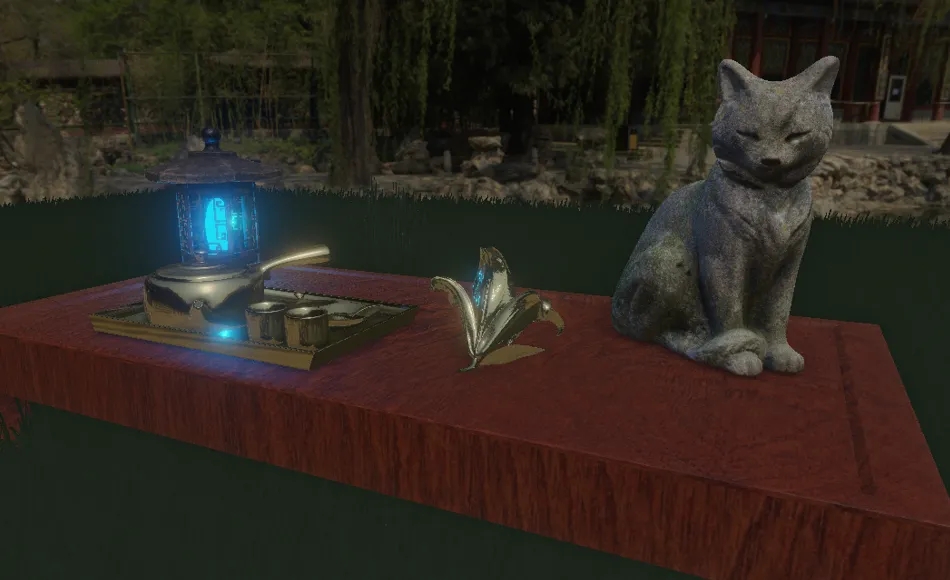
using Solid Blue Preset
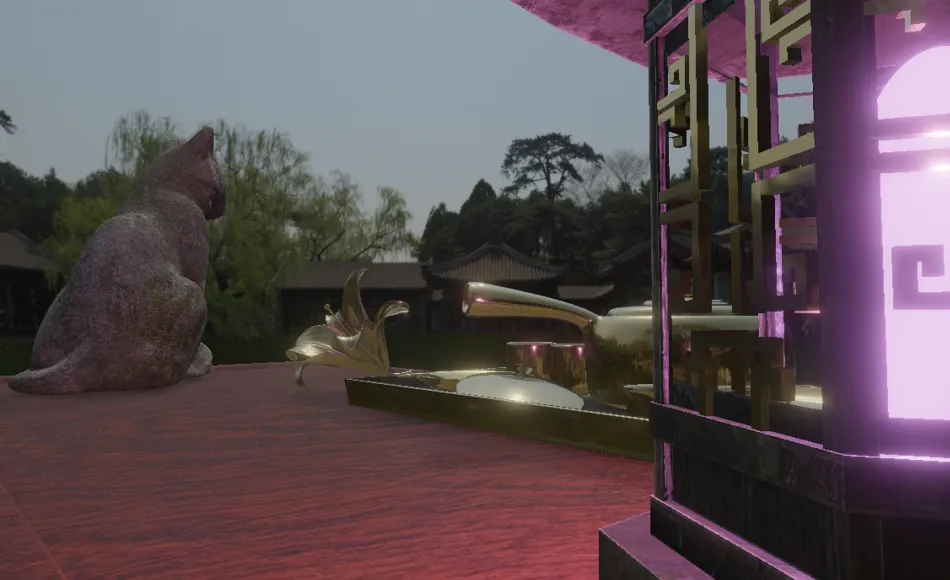
using Ambiant Purple Preset
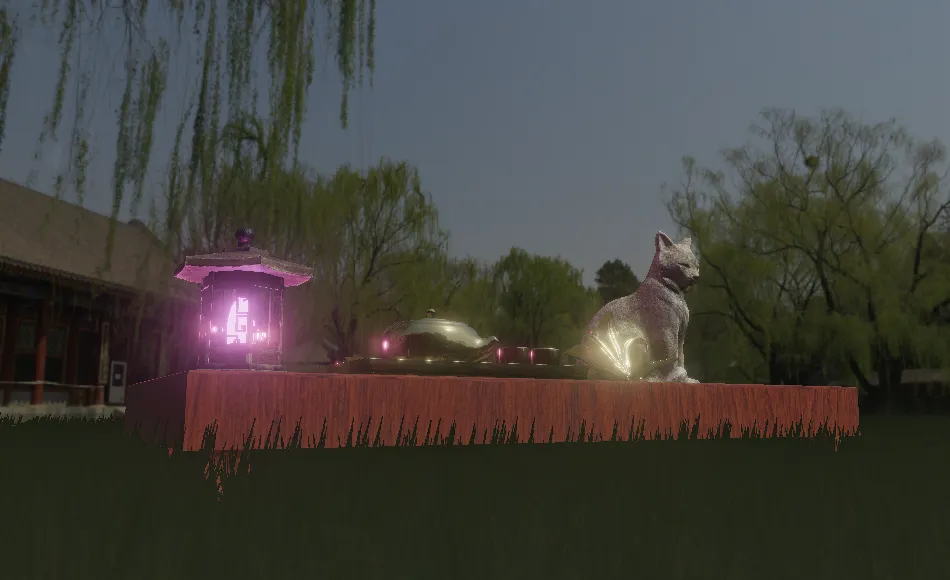
using Powerfull Pink Preset
I will talk about each part in the order of the drawing in the pipeline.
Loading
HDR Texture
HDR Texture or High Dynamic Range are textures that store a much wider dynamic range of luminosity. They capture details especially when it’s very bright.
For us, the major change was to write their data as floats. And to modify the format references for the openGL texture binding system.
And for rendering, we had to put them back into a visual reference that our monitors could understand, thanks to tone mapping. The value must be between 0.0 and 1.0 (Low Dynamic Range).
Tone mapping that I apply at the end to my framebuffer which handles PostProcessing
OBJ Model
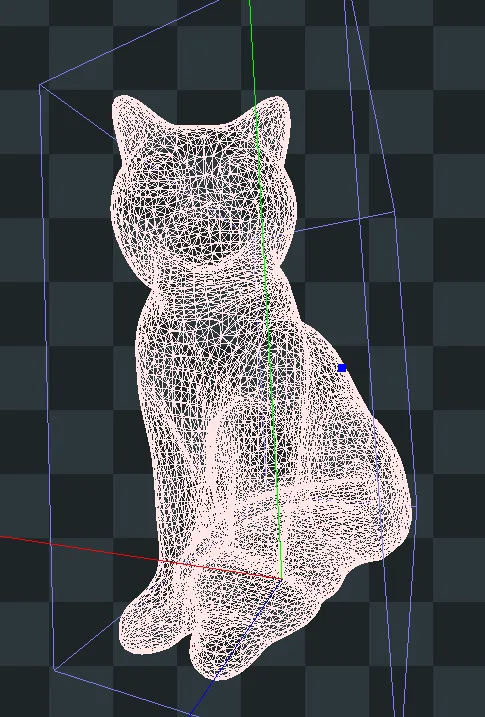
The image above shows the rendering of my chat mesh on RenderDoc.
To achieve this, we used Assimp, a cross-platform open-source library that reads data from our 3D model, here rendered in .OBJ format.
.obj is a file that stores information such as vertex positions, normals, etc.
We store them to translate them to openGL.
Shadow Map
Depth Map
Firstly, shadows are a consequence of light.
There are several types of light caster, but here we’re just going to talk about directional light.
In fact, in my scene, only the directional light emits shadows. It’s supposed to represent the sunlight that’s drawn in my skybox.
The depth map is a texture designed to display the depth of the elements according to the point of view of the light producing the shadows.
We give our objects this texture so that we can apply the shadow during the drawing phase.
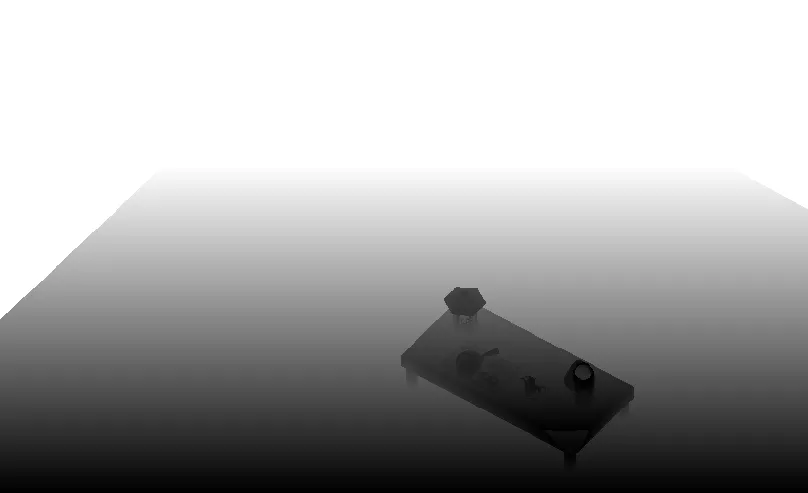
Exemple of a dethmap
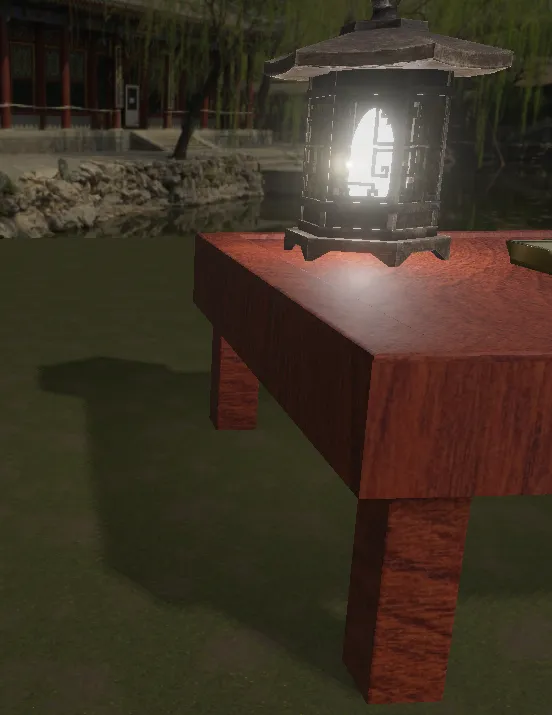
We can see the shadow of the table on the floor
float ShadowCalculation(vec4 fragPosLightSpace)
{

    vec3 projCoords = fragPosLightSpace.xyz / fragPosLightSpace.w;
    projCoords = projCoords * 0.5 + 0.5;
    if (projCoords.z > 1.0) {
        return 0.0;
    }

    // get closest depth value from light's perspective
    float closestDepth = texture(shadowMap, projCoords.xy).r;

    float currentDepth = projCoords.z;

    vec3 lightDir = -directionalLightDirection; //normalize(lightPos - fragPos);
    float bias = 0.006;
    float shadow = 0.0;
    vec2 texelSize = vec2(1.0) / vec2(textureSize(shadowMap, 0));

    for(int x = -1; x <= 1; ++x){
        for(int y = -1; y <= 1; ++y){
            float pcfDepth = texture(shadowMap, projCoords.xy + vec2(x, y) * texelSize).r;
            shadow += currentDepth - bias > pcfDepth ? 1.0 : 0.0;
        }
    }
    shadow /= 9.0;
    return shadow;
}


...
vec4 FragPosLightSpace = lightSpaceMatrix * fragWorldPos;
float shadow = ShadowCalculation(FragPosLightSpace);
Lo += (1.0 - shadow) * (kD * albedo / PI + specular) * radiance * NdotL;
Deferred Shading and SSAO
GBuffer ?
The G-Buffer for Geometry buffer is a frame buffer that stores information about the objects in the scene.
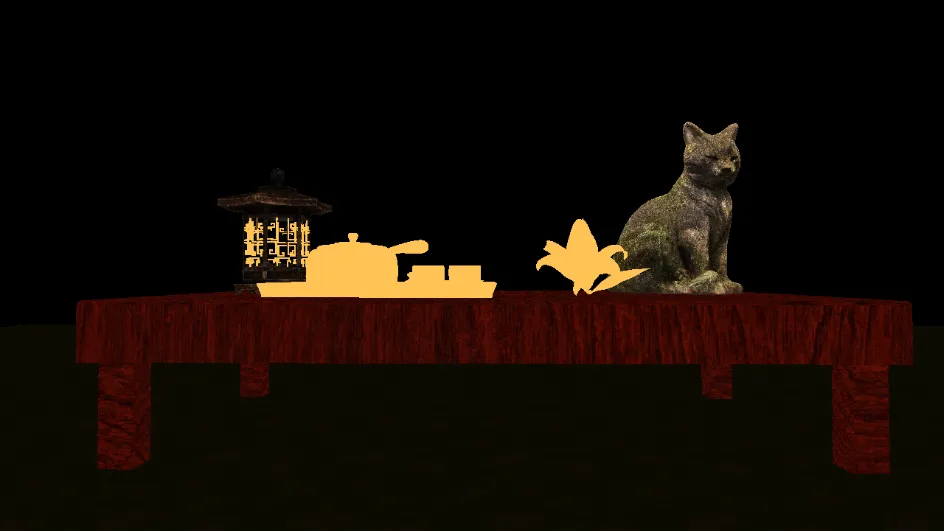
Here I’m storing positions in the gPosition texture, normals in the gNormal texture and colours in the gAlbedo texture.
We’ll see how to use the PBR later, but I need other information to render an object.
To avoid creating a new texture I store these values in the Alpha value of the textures in my GBuffer.
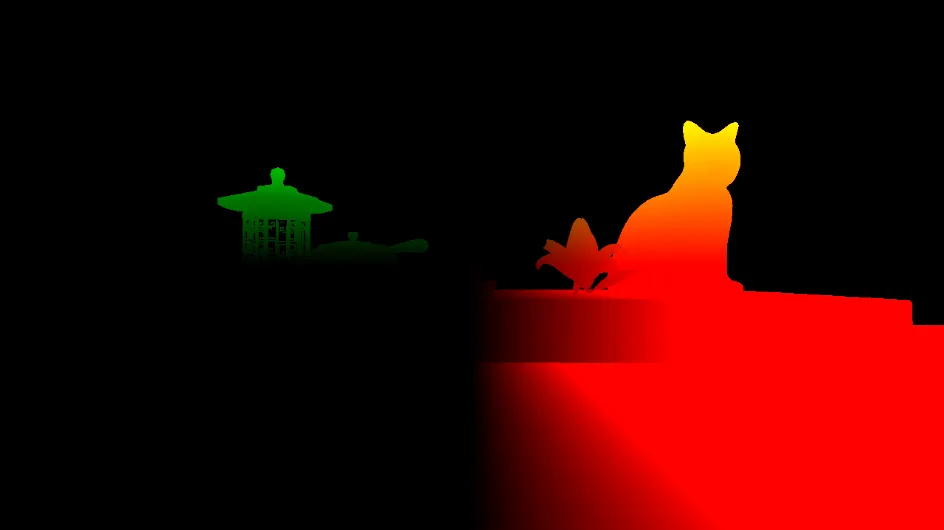
gPosition Texture
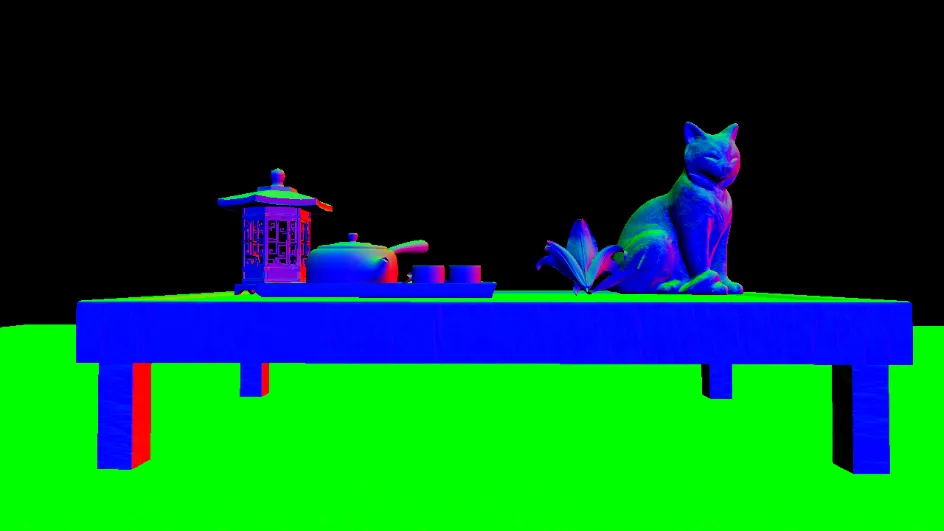
gNormal Texture
gAlbedo Texture
Note: My instantiated grass is not in this buffer because it uses a blending system for its transparency which is not compatible with defered shading.
With this system, the Gbuffer just needs to receive the geometry from the objects and then render it using the light pass.
SSAO
SSAO or Screen Space Ambient Occlusion is a way of adding a shadow effect in occluded areas.
SSAO adds a sense of realism and depth, and is coupled with the AO value or texture that we’ll look at later in the PBR section.
The SSAOMap is calculated using the position between objects and their depth.
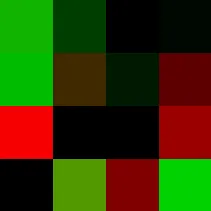
We use a kernel noise texture in the ssao map creation to take the values for the surrounding position. This is useful for avoiding patterns that are too uniform.
Noise
After having this SSAOMap we blur it for a more pleasant rendering.

<br><i>SSAO Map without blur</i><br>
PBR and Lightning
PBR
The biggest part of the programme is the laws governing the rendering system.
The scene uses PBR or Physically Based Rendering.
The aim is to simulate the behaviour of light on objects and their surfaces asrealistically as possible.
Objects have given textures to represent their behaviour when exposed to light.
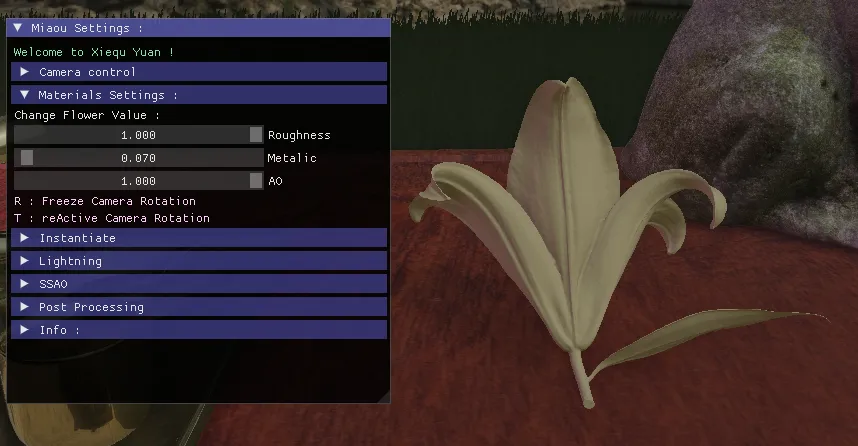
Roughness: the higher this value, the more light is diffused in multiple directions. Alow value corresponds to a smooth surface.
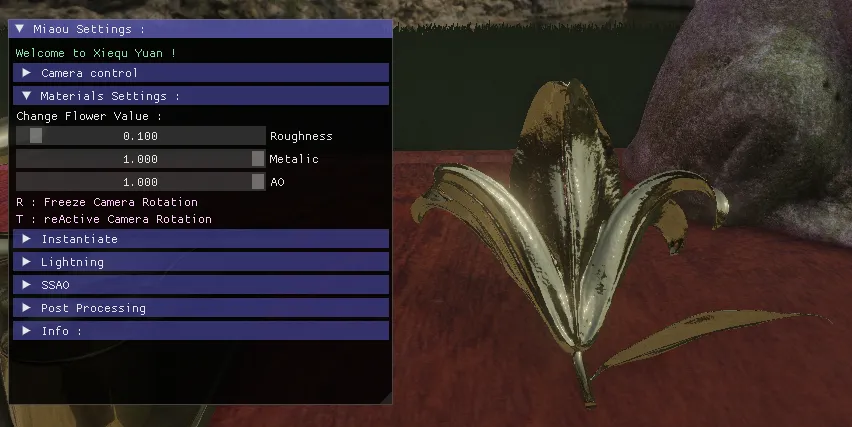
Metalic: the higher the value, the more the object will reflect light.
AO: to simulate object shadows in certain hollows
As seen above, the AO adds a depth effect to the object itself.
You can experiment on these three concepts on the flower in my scene by tweaking thevalues.
Roughness visual proprieties
Metalic visual proprieties
PBR also includes the principle of energy conservation.
    // material properties
    vec3 albedo = texture(gAlbedo, TexCoords).rgb;
    float metallic = texture(gPosition, TexCoords).a;
    float roughness = texture(gNormal, TexCoords).a;
    float ao = texture(gAlbedo, TexCoords).a;
    float ssao = texture(SSAOMap, TexCoords).r;
    float combined_ao = ssao * ao;

    // input lighting data
    vec3 N = mat3(inverseViewMatrix) * texture(gNormal, TexCoords).rgb; ;
    vec3 V = normalize(camPos - WorldPos);
    vec3 R = reflect(-V, N);

    // calculate reflectance at normal incidence;
    vec3 F0 = vec3(0.04);
    F0 = mix(F0, albedo, metallic);

    // reflectance equation
    vec3 Lo = vec3(0.0);

    // calculate per-light radiance
    vec3 L = normalize(-directionalLightDirection);
    vec3 H = normalize(V + L);
    //float distance = length(lightPositions[i] - WorldPos);
    //float attenuation = 1.0 / (distance * distance);
    vec3 radiance = directionalLightColor;

    // Cook-Torrance BRDF
    float NDF = DistributionGGX(N, H, roughness);
    float G   = GeometrySmith(N, V, L, roughness);
    vec3 F    = fresnelSchlick(max(dot(H, V), 0.0), F0);

    vec3 numerator    = NDF * G * F;
    float denominator = 4.0 * max(dot(N, V), 0.0) * max(dot(N, L), 0.0) + 0.0001;

    vec3 kS = F;
    vec3 kD = vec3(1.0) - kS;
    kD *= 1.0 - metallic;
    float NdotL = max(dot(N, L), 0.0);
    ...
IBL
IBL or Image Based Lightning
We use the PBR values and the brdf LUT to simulate the reflection or not of the skyboxon objects.
For this we introduce some new Texture :
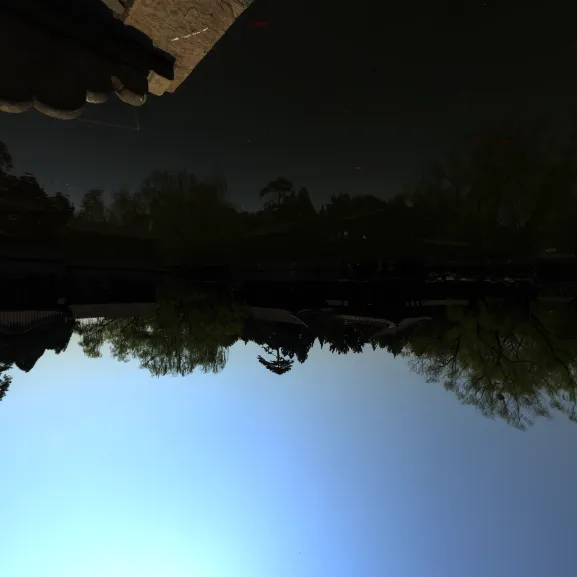
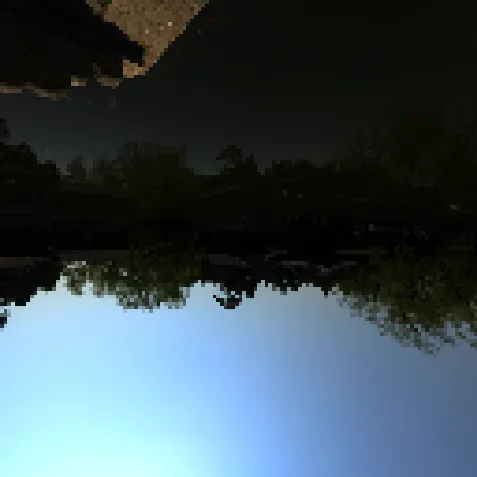

For this effect to work, we need an HDR skybox texture.
Now that we have information on the intensity of light in our sky. We can approximatewhich areas are the most intense.
A brdf lookup texture :
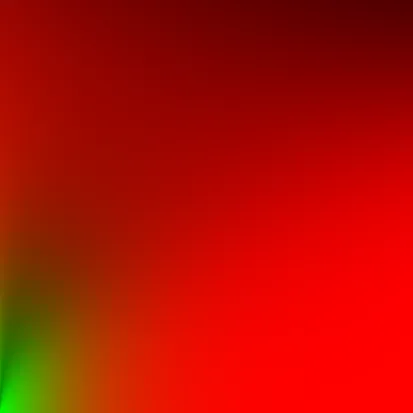
This is a texture that represents how light propagates around the object.
This is an approximation because as we see earlier the original function is an integral


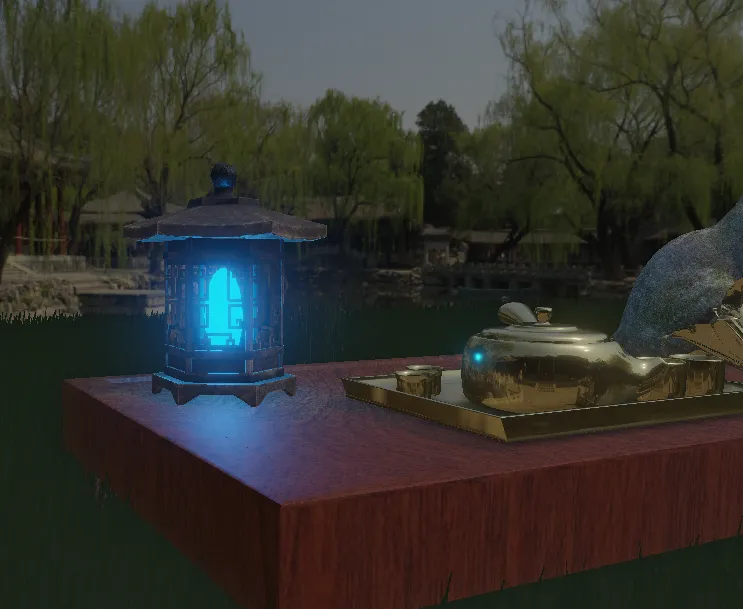
Admire the work with the reflection of the skybox on the golden tea set or by settingthe flower values to high metalic and low roughness thanks to the IBL.
~~~~~~~~~~~~~~~~~~~~~~~~~~~~~~~~~
    // ambient lighting (we now use IBL as the ambient term)
   F = fresnelSchlickRoughness(max(dot(N, V), 0.0), F0, roughness);

   kS = F;
   kD = 1.0 - kS;
   kD *= 1.0 - metallic;

   vec3 irradiance = texture(irradianceMap, N).rgb;
   vec3 diffuse      = irradiance * albedo;

   // sample both the pre-filter map and the BRDF lut and combine them together as per the Split-Sum approximation to get the IBL specular part.
   const float MAX_REFLECTION_LOD = 4.0;
   vec3 prefilteredColor = textureLod(prefilterMap, R,  roughness * MAX_REFLECTION_LOD).rgb;
   vec2 brdf  = texture(brdfLUT, vec2(max(dot(N, V), 0.0), roughness)).rg;
   specular = prefilteredColor * (F * brdf.x + brdf.y);

   vec3 ambient = (kD * diffuse + specular) * combined_ao;

   vec3 color = ambient + Lo;
~~~~~~~~~~~~~~~~~~~~~~~~~~~~~~~~~
Another Light !
I add a simple light point, with custom color to add a better atmosphere to the scene but it also show how the PBR can render cool reflection with multiple light source
for(int i = 0; i < 1; ++i)
{
    // calculate per-light radiance
    L = normalize(lightPositions[i] - WorldPos);
    H = normalize(V + L);
    float distance = length(lightPositions[i] - WorldPos);
    float attenuation = 1.0 / (distance * distance);
    radiance = lightColors[i] * attenuation;

    // Cook-Torrance BRDF
    NDF = DistributionGGX(N, H, roughness);
    G   = GeometrySmith(N, V, L, roughness);
    F    = fresnelSchlick(max(dot(H, V), 0.0), F0);

    numerator    = NDF * G * F;
    denominator = 4.0 * max(dot(N, V), 0.0) * max(dot(N, L), 0.0) + 0.0001;
    specular = numerator / denominator;

     // kS is equal to Fresnel
     kS = F;
     kD = vec3(1.0) - kS;
    kD *= 1.0 - metallic;
    NdotL = max(dot(N, L), 0.0);

    // add to outgoing radiance Lo
    Lo += (kD * albedo / PI + specular) * radiance * NdotL;
}
Instancing
How to draw multiple object at once

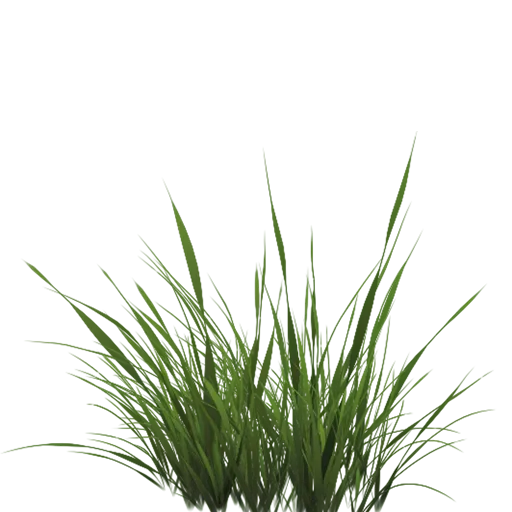
In order to optimize, instead of drawing a mesh 4000 times that draws a clump of grass.
I store all the position values of my meshes to make a single draw call for my 4000 elements.
I also tried to add a wind movement effect through the vertex buffer.
glm::mat4* modelMatrices;
...
for (unsigned int zIndex = 0; zIndex < amount_; zIndex++) {
  for (unsigned int xIndex = 0; xIndex < amount_; xIndex++) {
    glm::mat4 model = glm::mat4(1.0f);
    ...
    model = glm::translate(model, glm::vec3(x, y, z));
    modelMatrices[i] = model;
    i++;
  }
}
An other Optimisation ?
To optimize, I also use a global state change for opengl on some of my models, which allows only the front face of an object to be drawn.
This is called back face culling. Front face culling also exists, but it’s the opposite principle.
For example, it’s not used to render my cube map or flat objects like floor plane or grass quad.
// Enable Face culling
glEnable(GL_CULL_FACE);
glCullFace(GL_BACK);
Cubemap
6 Faces ?
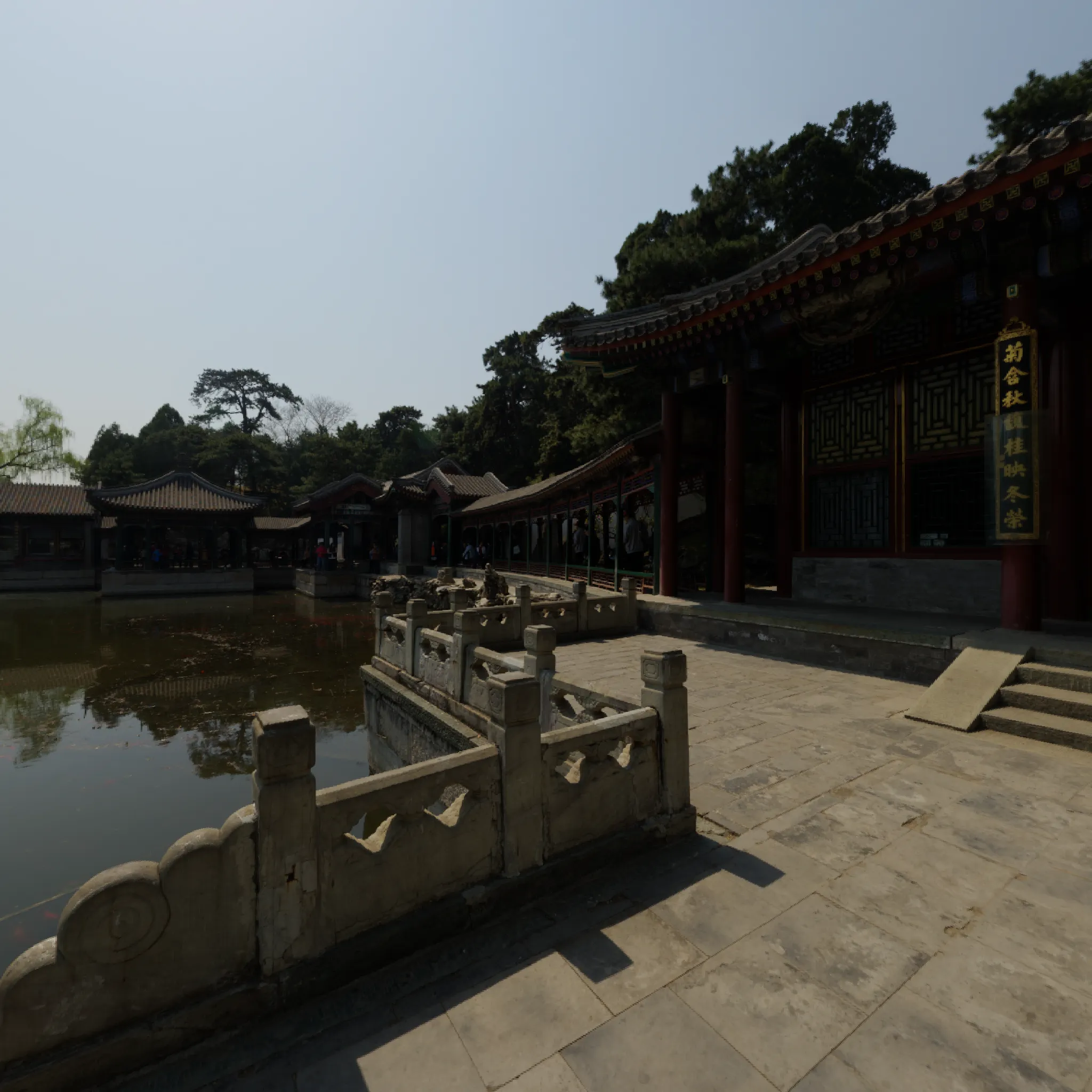
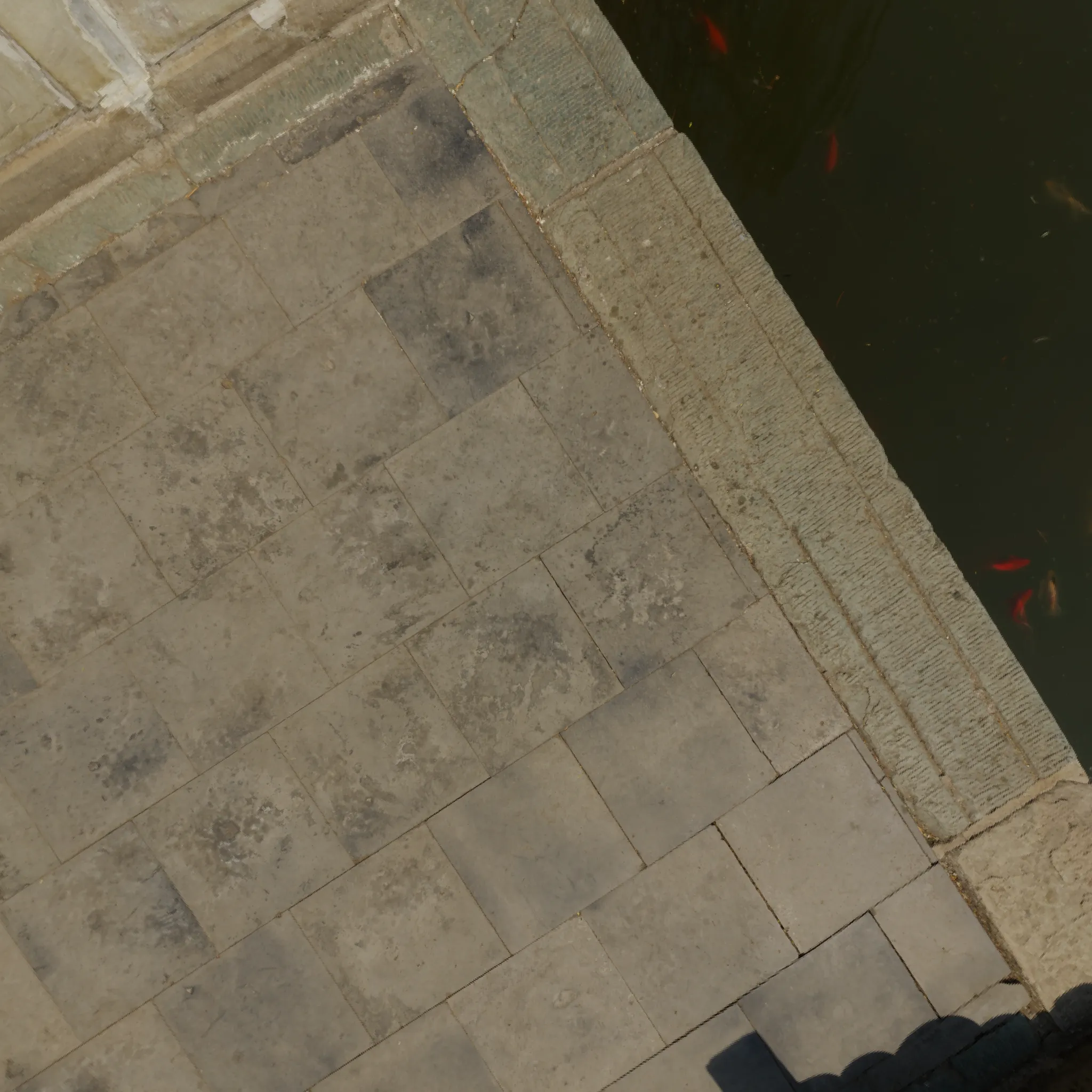
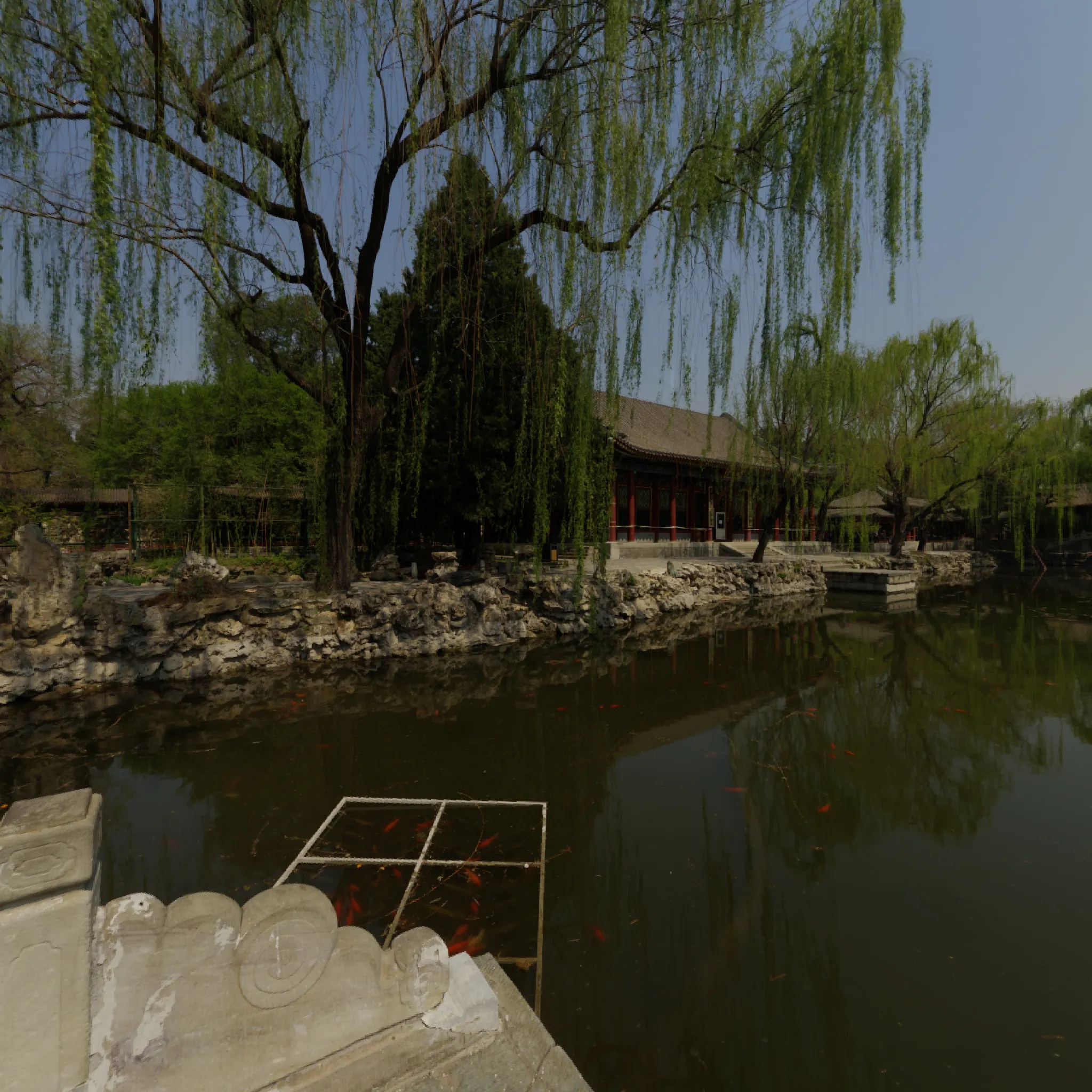
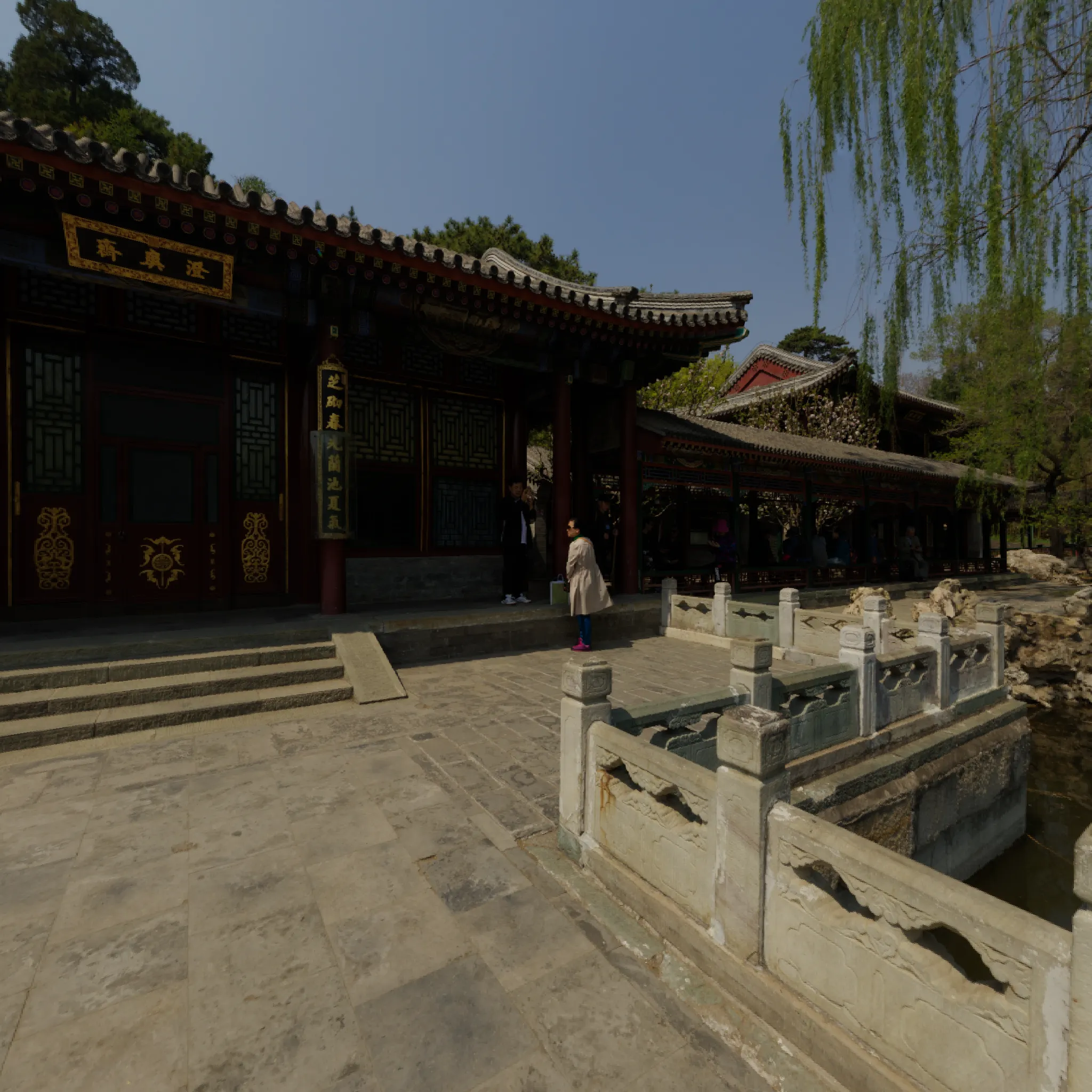
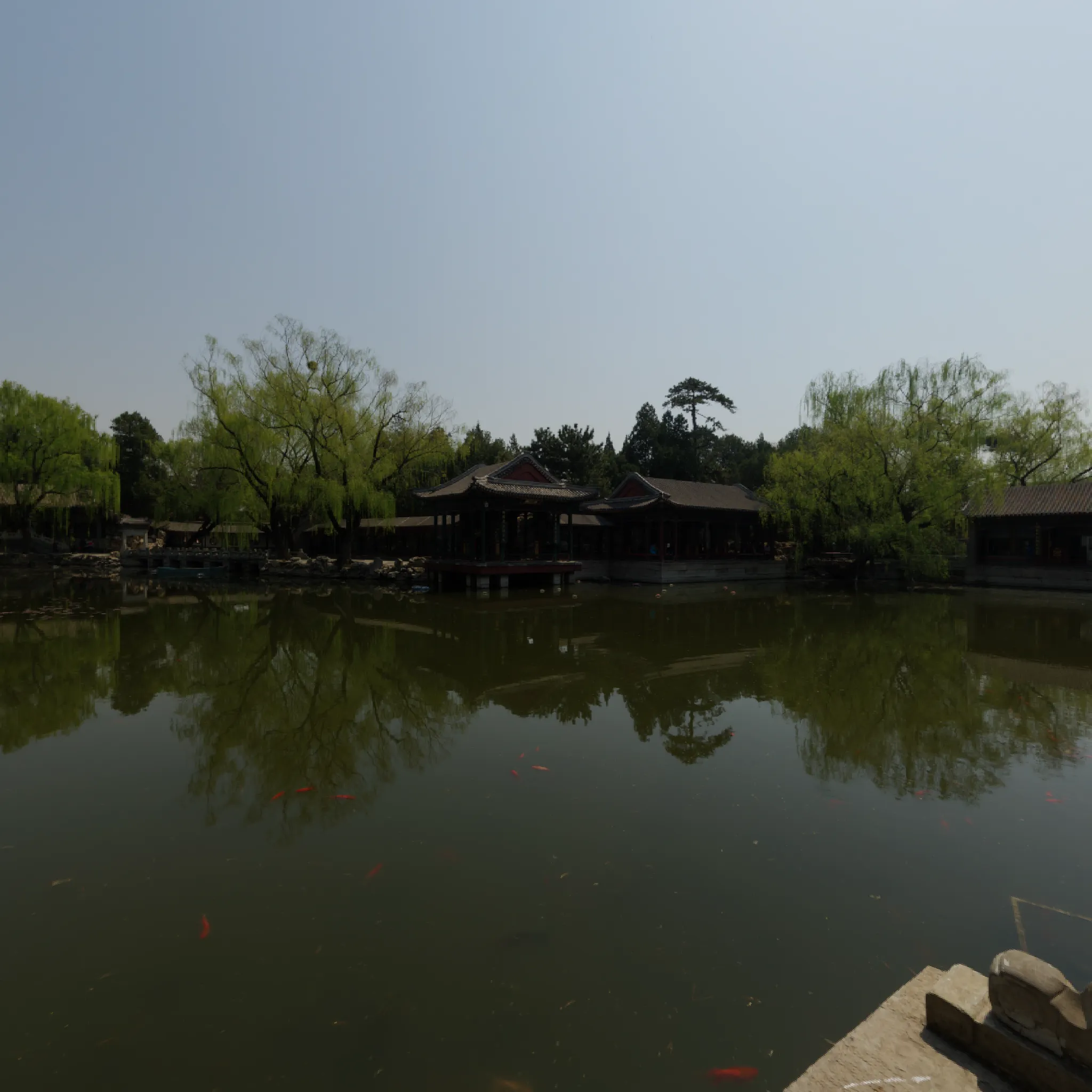
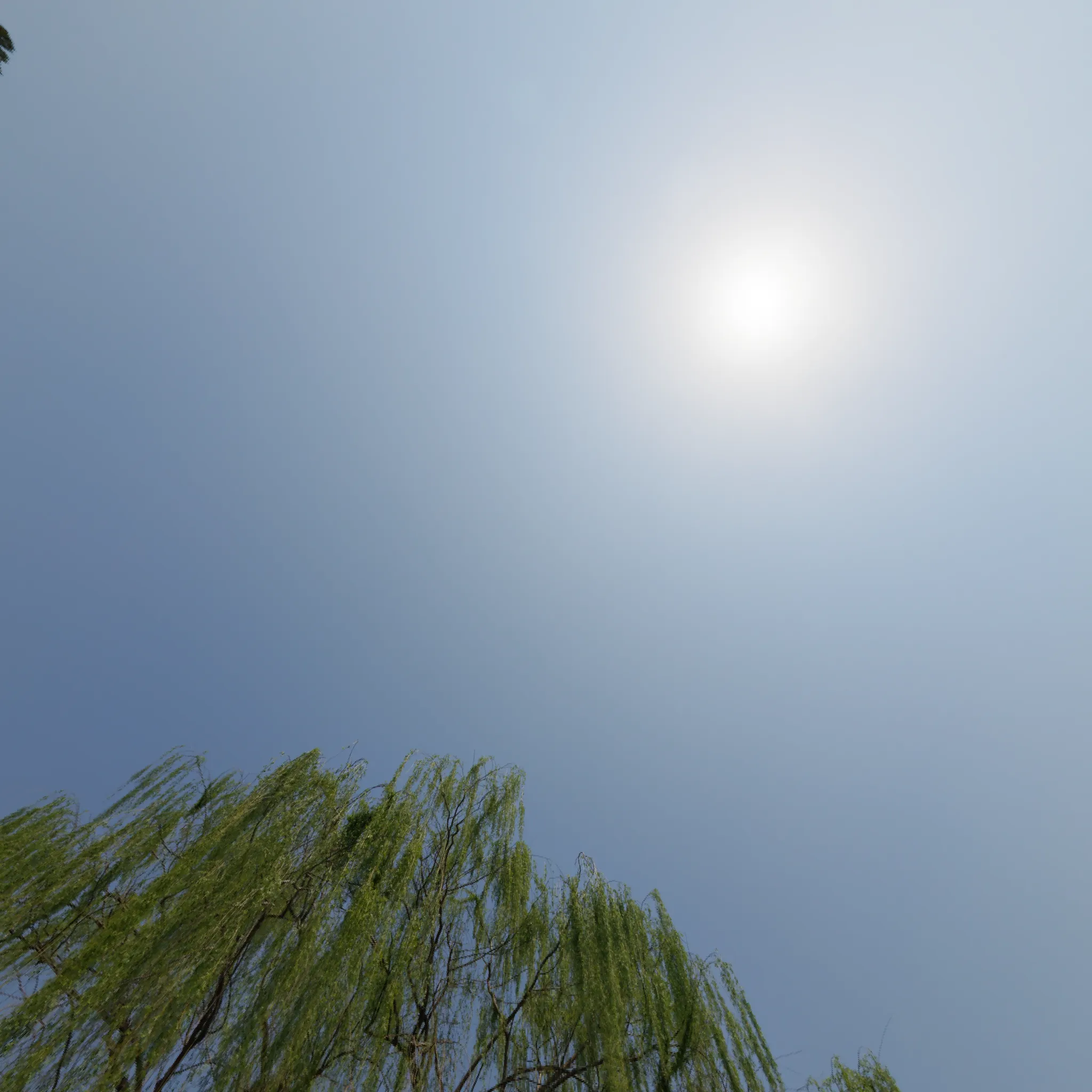
In the beginning, we simply gave 6 textures to openGL to get a cube that simulated askybox.
  ~~~~~~~~~~~~~~~~~~~~~~~~~~~~~~~~~
  // pbr: setup cubemap to render to and attach to framebuffer
    // ---------------------------------------------------------
    glGenTextures(1, &envCubemap);
    glBindTexture(GL_TEXTURE_CUBE_MAP, envCubemap);
    for (unsigned int i = 0; i < 6; ++i) {
      glTexImage2D(GL_TEXTURE_CUBE_MAP_POSITIVE_X + i, 0, GL_RGB16F, 4096, 4096,
                   0, GL_RGB, GL_FLOAT, nullptr);
    }
    glTexParameteri(GL_TEXTURE_CUBE_MAP, GL_TEXTURE_WRAP_S, GL_CLAMP_TO_EDGE);
    glTexParameteri(GL_TEXTURE_CUBE_MAP, GL_TEXTURE_WRAP_T, GL_CLAMP_TO_EDGE);
    glTexParameteri(GL_TEXTURE_CUBE_MAP, GL_TEXTURE_WRAP_R, GL_CLAMP_TO_EDGE);
    glTexParameteri(GL_TEXTURE_CUBE_MAP, GL_TEXTURE_MIN_FILTER, GL_LINEAR);
    glTexParameteri(GL_TEXTURE_CUBE_MAP, GL_TEXTURE_MAG_FILTER, GL_LINEAR);

    // pbr: convert HDR equirectangular environment map to cubemap equivalent
    // ----------------------------------------------------------------------
    equirectangular_to_cubemap_pipeline.SetInt("equirectangularMap", 0);
    equirectangular_to_cubemap_pipeline.SetMat4("projection", captureProjection);
    hdr_cubemap.BindTextureHDR(GL_TEXTURE0);

    glViewport(0, 0, 4096, 4096);
  ~~~~~~~~~~~~~~~~~~~~~~~~~~~~~~~~~
PostProcessing
Bloom effect
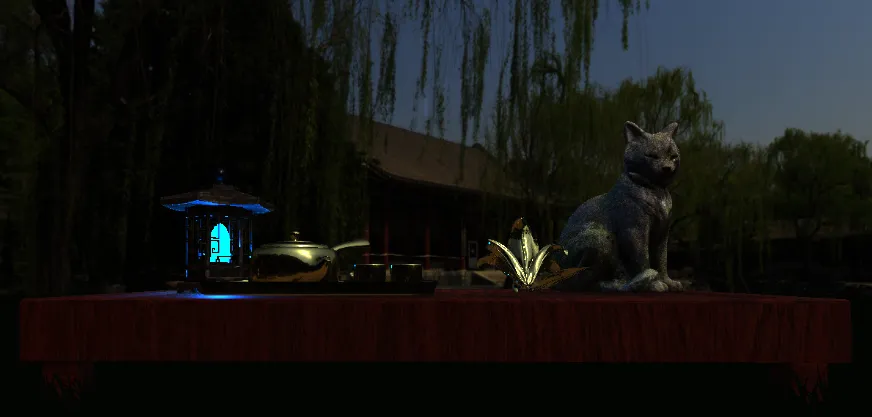
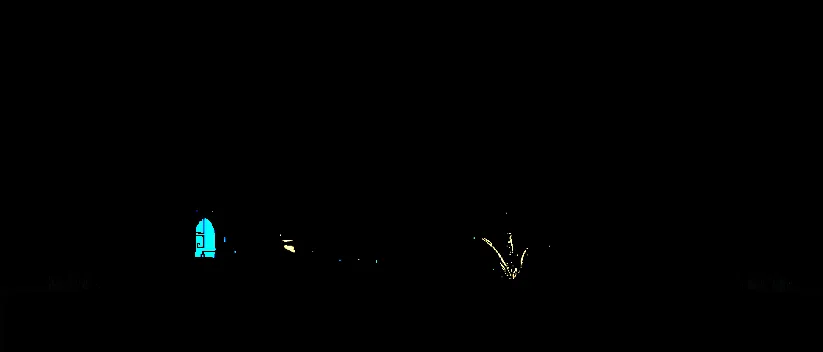
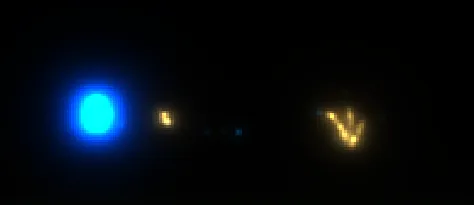
The bloom effect is generated from the render buffer by detecting all scene valuesgreater than 1.0, thanks to HDR.
This texture is downscaled and then upscaled again.
It is then applied to the final scene
A cool Article that show how bloomwas affected elements before try to make it physically based.
Simple Color Filter
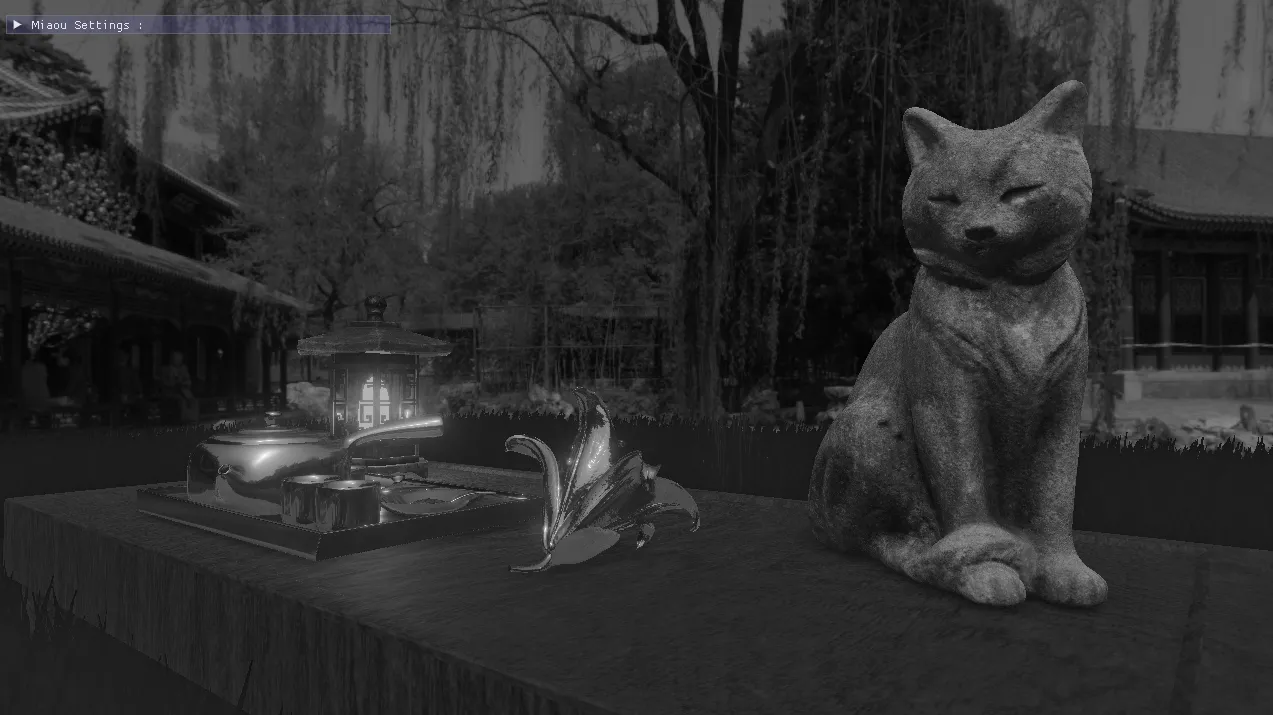
After applying tone mapping and gamma correction, I can activate a black and white filter.
It reads the color elements of the buffer and changes them to grayscale.
Cool, it looks like a Kurosawa film!
  ~~~~~~~~~~~~~~~~~~~~~~~~~~~~~~~~~
  // tone mapping
  result = result / (result + vec3(1.0));
  //gamma correct
  const float gamma = 1.8;
  result = pow(result, vec3(1.0 / gamma));
  FragColor = vec4(result, 1.0);
  ...

  if(BnWFilter){
      float average = 0.2126 * FragColor.r + 0.7152 * FragColor.g + 0.0722 * FragColor.b;
      FragColor = vec4(average, average, average, 1.0);
    }
  ~~~~~~~~~~~~~~~~~~~~~~~~~~~~~~~~~
Conclusion
First of all, thank you for reading.
In addition to our course, several elements of the scene are realised thanks to LearnOpenGL website.
I also used RenderDoc for graphical debugging.
This is a powerful tool that can give us information about the current position of the mesh or any information given to and by the shader.Uniformity can also be visualised. We can also access an edit shader directly from the RenderDoc. Can preview texture on input or output from frame or gbuffer. Etc...
He die for me :(